The National Guard has a storied history in the United States, serving as a vital component of both state and federal military operations. In Chicago, the National Guard plays a multifaceted role, often stepping in during times of crisis, natural disasters, or civil unrest. This dual mission allows the Guard to support local communities while also fulfilling federal responsibilities.
As a citizen-soldier force, the National Guard is composed of individuals who balance civilian life with military service, making them uniquely positioned to understand and respond to the needs of their communities. In recent years, the National Guard’s presence in Chicago has expanded beyond traditional roles, particularly in relation to immigration enforcement. The intersection of the National Guard and Immigration and Customs Enforcement (ICE) activities has sparked significant debate and concern among residents and advocacy groups.
As you delve into this complex relationship, it becomes clear that the National Guard’s involvement in immigration enforcement raises questions about its mission, community trust, and the implications for those affected by immigration policies.
Key Takeaways
- The National Guard in Chicago plays a crucial role in supporting local law enforcement and responding to emergencies.
- ICE activities in Chicago include immigration enforcement, deportation, and border security.
- The National Guard supports ICE activities through logistical and operational assistance, such as surveillance and transportation.
- The National Guard’s intervention in Chicago has led to increased militarization and fear within immigrant communities.
- Controversies surrounding the National Guard’s involvement in ICE activities include concerns about human rights violations and the erosion of trust between law enforcement and the community.
Overview of ICE activities in Chicago
Immigration and Customs Enforcement (ICE) operates as a critical agency within the Department of Homeland Security, tasked with enforcing immigration laws and ensuring border security. In Chicago, ICE’s activities have included apprehending undocumented immigrants, conducting workplace raids, and collaborating with local law enforcement agencies to identify individuals who may be in violation of immigration laws. The agency’s presence in the city has been met with mixed reactions, as some view its actions as necessary for national security, while others see them as aggressive and detrimental to community trust.
ICE’s operations in Chicago are often characterized by a focus on high-profile targets, including individuals with criminal records or those who pose a perceived threat to public safety. However, these activities can also lead to collateral consequences, affecting families and communities at large. As you explore ICE’s role in Chicago, it becomes evident that its actions are not merely administrative; they have profound implications for the lives of many residents, particularly those from immigrant backgrounds who may live in fear of deportation.
The role of the National Guard in supporting ICE activities

The National Guard’s involvement in supporting ICE activities represents a significant shift in its traditional mission. While the Guard has historically focused on disaster response and community support, its recent collaboration with ICE has raised questions about its role in immigration enforcement. The National Guard can provide logistical support, intelligence sharing, and even personnel to assist ICE in its operations.
This partnership is often framed as a means to enhance public safety and ensure compliance with immigration laws. However, this collaboration can blur the lines between military and civilian law enforcement roles. As you consider the implications of the National Guard’s support for ICE activities, it is essential to recognize that this involvement can lead to heightened tensions within communities.
Many residents may feel that the presence of military personnel in immigration enforcement operations exacerbates fears and mistrust, particularly among immigrant populations who may already feel vulnerable.
The impact of the National Guard’s intervention in Chicago
The impact of the National Guard’s intervention in Chicago is multifaceted and far-reaching. On one hand, supporters argue that the Guard’s involvement enhances public safety by providing additional resources to ICE and local law enforcement agencies. They contend that this collaboration can lead to more effective enforcement of immigration laws and a reduction in crime rates.
Proponents believe that by working together, these agencies can create a safer environment for all residents. Conversely, critics argue that the National Guard’s presence in immigration enforcement operations can have detrimental effects on community relations. The fear of deportation can lead to a chilling effect on immigrant communities, discouraging individuals from reporting crimes or seeking assistance from law enforcement.
This dynamic can create an atmosphere of distrust that undermines public safety efforts. As you reflect on the impact of the National Guard’s intervention, it is crucial to consider both sides of the argument and recognize the complexities involved.
Controversies surrounding the National Guard’s involvement in ICE activities
The controversies surrounding the National Guard’s involvement in ICE activities are numerous and deeply rooted in broader societal debates about immigration policy and enforcement. Critics argue that deploying military personnel for immigration enforcement blurs the lines between civilian law enforcement and military action, raising concerns about civil liberties and human rights. This perspective is particularly pronounced among immigrant advocacy groups who fear that such actions could lead to increased racial profiling and discrimination.
Additionally, there are concerns about the potential for militarization of local communities. The presence of armed National Guard members conducting immigration enforcement operations can create an atmosphere of fear and intimidation among residents. As you explore these controversies, it becomes clear that they are not merely about policy; they reflect deeper societal divisions regarding immigration, race, and justice.
Public opinion on the National Guard’s role in immigration enforcement
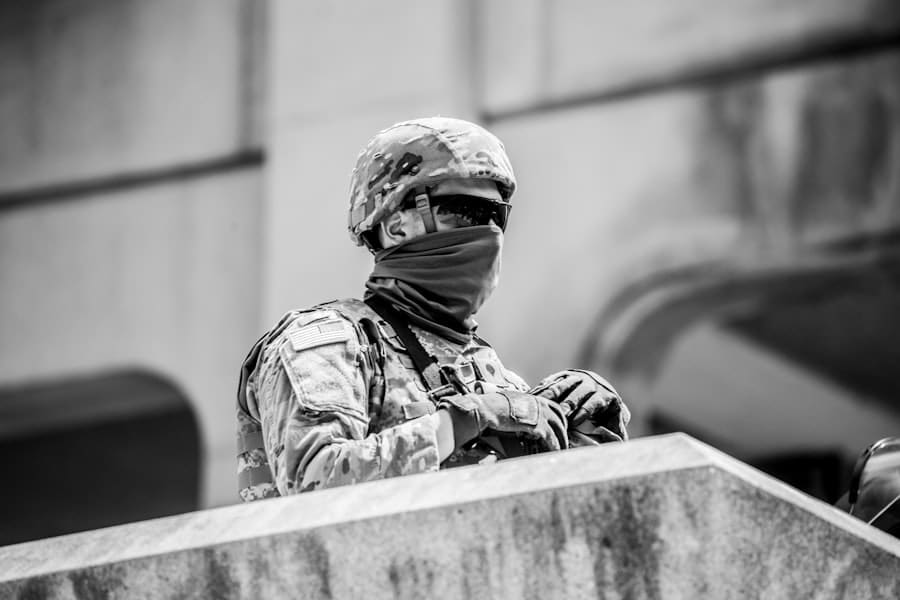
Public opinion on the National Guard’s role in immigration enforcement is deeply divided. Some segments of the population support increased military involvement in immigration matters, viewing it as a necessary step to uphold the rule of law and protect national security. These individuals often believe that stricter enforcement is essential for maintaining order and ensuring that individuals who violate immigration laws face consequences.
On the other hand, many residents express strong opposition to the National Guard’s involvement in ICE activities. Concerns about civil rights violations, racial profiling, and community trust are prevalent among those who advocate for more humane immigration policies. As you consider public opinion on this issue, it is essential to recognize that perspectives are shaped by personal experiences, cultural backgrounds, and political beliefs.
This division underscores the complexity of immigration enforcement debates in Chicago and beyond.
Legal and ethical considerations of the National Guard’s intervention
The legal and ethical considerations surrounding the National Guard’s intervention in immigration enforcement are complex and multifaceted. Legally, there are questions about the extent to which military personnel can engage in civilian law enforcement activities. The Posse Comitatus Act restricts the use of federal military forces for domestic law enforcement purposes unless explicitly authorized by Congress or the Constitution.
This raises important questions about whether the National Guard’s support for ICE activities aligns with legal frameworks governing military involvement in civilian affairs. Ethically, there are significant concerns about the implications of using military resources for immigration enforcement. Many argue that such actions can lead to violations of human rights and civil liberties, particularly for vulnerable populations.
As you navigate these legal and ethical considerations, it becomes clear that they are not merely academic; they have real-world implications for individuals and communities affected by immigration policies.
Collaborative efforts between the National Guard and local law enforcement in Chicago
Collaborative efforts between the National Guard and local law enforcement agencies in Chicago have become increasingly common as both entities seek to address public safety concerns. These partnerships often involve sharing resources, intelligence, and personnel to enhance overall effectiveness in law enforcement operations. Proponents argue that such collaborations can lead to improved outcomes for communities by fostering a more coordinated approach to crime prevention and response.
However, these collaborations also raise questions about accountability and transparency. When military personnel work alongside local police forces, there is a risk that community members may feel less inclined to engage with law enforcement due to fears of militarization or potential repercussions related to their immigration status. As you examine these collaborative efforts, it is essential to consider both their potential benefits and drawbacks while recognizing the need for ongoing dialogue between law enforcement agencies and community members.
The National Guard’s training and preparation for supporting ICE activities
The training and preparation of the National Guard for supporting ICE activities involve specialized programs designed to equip personnel with the skills necessary for effective collaboration with federal agencies. This training often includes instruction on immigration laws, cultural sensitivity, and community engagement strategies. By preparing Guardsmen for these roles, military leaders aim to ensure that their involvement is both effective and respectful of community dynamics.
However, there are concerns about whether this training adequately addresses the complexities of immigration enforcement. Critics argue that military training may not fully prepare Guardsmen for the nuanced realities faced by immigrant communities or equip them with the tools needed to navigate sensitive situations effectively. As you explore this aspect of the National Guard’s involvement in ICE activities, it is crucial to consider how training impacts both operational effectiveness and community relations.
The National Guard’s response to humanitarian concerns in immigration enforcement
In recent years, there has been growing recognition of humanitarian concerns related to immigration enforcement practices. The National Guard has faced pressure to respond compassionately to these issues while still fulfilling its mission to support law enforcement agencies like ICE. This response often involves balancing operational objectives with a commitment to human rights principles.
The National Guard has taken steps to address humanitarian concerns by implementing policies aimed at minimizing harm to vulnerable populations during operations. This includes efforts to ensure that individuals are treated with dignity and respect during encounters with law enforcement. As you reflect on these responses, it becomes clear that navigating humanitarian concerns within the context of immigration enforcement is an ongoing challenge that requires careful consideration from all parties involved.
Future implications of the National Guard’s involvement in immigration enforcement
Looking ahead, the future implications of the National Guard’s involvement in immigration enforcement remain uncertain but significant. As debates over immigration policy continue to evolve at both state and federal levels, it is likely that the role of the National Guard will also adapt accordingly. Changes in political leadership or shifts in public sentiment could influence how military resources are allocated toward immigration matters.
Moreover, ongoing discussions about civil rights protections and community trust will shape how residents perceive the National Guard’s role in their lives. As you contemplate these future implications, it is essential to recognize that this issue is not static; it will continue to evolve as societal attitudes toward immigration change over time. The relationship between military forces like the National Guard and civilian communities will remain a critical area for dialogue as we navigate these complex challenges together.
In the wake of the National Guard’s crucial involvement in Chicago’s ICE activities, it’s important to consider the broader implications of community support and infrastructure in the city. An interesting related article discusses the importance of sustainable practices in urban areas, highlighting services that contribute to a greener Chicago. For instance, the article on the best Chicago composting service explores how local initiatives are helping to reduce waste and promote environmental responsibility. This focus on sustainability complements the efforts to create a more supportive and resilient community in the face of various challenges.
FAQs
What is the National Guard?
The National Guard is a reserve military force that is composed of both Army and Air National Guard units. It is under the dual control of the state and federal government and can be called upon to assist in domestic emergencies and provide support to civil authorities.
What is ICE?
ICE stands for U.S. Immigration and Customs Enforcement, which is a federal agency responsible for enforcing immigration laws, investigating criminal and terrorist activities, and preventing illegal immigration.
What was the National Guard’s intervention in Chicago’s ICE activities?
The National Guard was called upon to intervene in Chicago’s ICE activities to provide support and assistance to local law enforcement in response to civil unrest and protests related to immigration enforcement actions.
What role did the National Guard play in the intervention?
The National Guard provided logistical support, security assistance, and coordination with local law enforcement to ensure the safety and security of both the public and ICE personnel during immigration enforcement activities in Chicago.
Was the National Guard’s intervention in Chicago’s ICE activities controversial?
The National Guard’s intervention in Chicago’s ICE activities was met with some controversy, with concerns raised about the potential militarization of immigration enforcement and the use of military forces in domestic law enforcement operations.